Employment shifts in Europe during the recovery: Three little noticed trends
In this blog piece, originally posted on Social Europe, Eurofound Research Manager John Hurley looks at shifting employment structures in recent years.

In this blog piece, originally posted on Social Europe, Eurofound Research Manager John Hurley looks at shifting employment structures in recent years.
The difference in working time between workers in the 28 EU Member States remains large and is especially marked between the ‘older’ 15 EU Member States and the 13 new Member States that joined the EU since 2004, according to new research from Eurofound.

Eurofound has launched a stakeholder survey in an effort to improve the way in which it reports on collective bargaining, and to transition from an initial focus on wage-bargaining outcomes to cover collective bargaining in a more holistic way,
Labour market slack is the shortfall between the volume of work desired by workers and the actual volume of work available. The aim of this report is to develop a more nuanced estimate of labour slack using EU Labour Force Survey data, which allows involuntary part-timers and inactive people with some labour market attachment to be identified and quantified.
The Foundation Forum 2017 on 14-15 November will bring together up to 200 experts, policymakers, employer and worker representatives, national governments, thinkers and practitioners in Dublin Castle to hammer out the issues around upward convergence as a common goal of social convergence in living and working conditions in the European Union.
The EU’s population and workforce are ageing. This has implications for employment, working conditions, living standards and welfare. How should we respond to these challenges?
In the following blog piece, originally posted on Social Europe, Eurofound Head of Information and Communication Mary McCaughey takes a look at what it was like to live and work in Europe in 2016.

2016 was a landmark year for Europe, both politically and economically. Eurofound's 2016 yearbook shows the latest developments in the work and lives of Europeans, describing trends and transitions in the areas of employment and jobs, workplace practices, working life and quality of life.
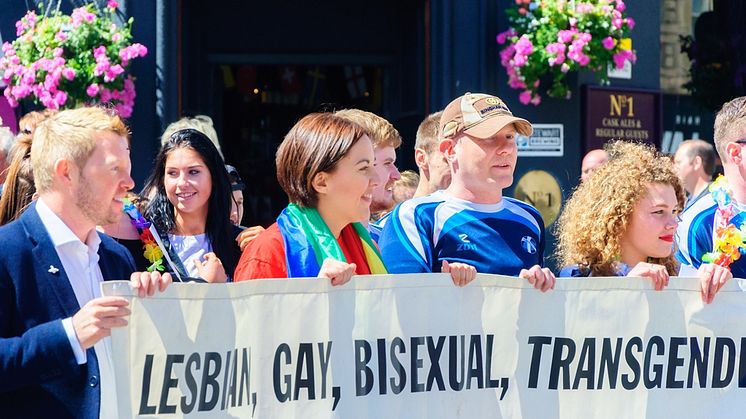
17 May is International Day against Homophobia, Transphobia and Biphobia #IDAHOT, aimed at raising awareness of LGBT rights violations and stimulating interest in LGBT rights work worldwide.
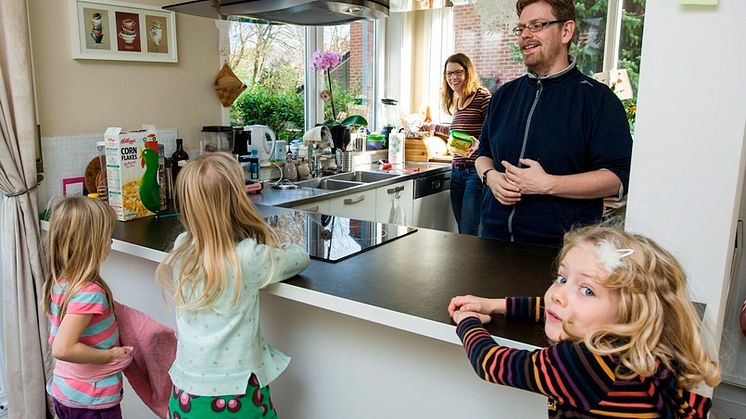
International Day of Families on 15 May is a day that focuses on the role of families and family-oriented policies in promoting education and overall well-being of their members. Eurofound presents an overview of its research and policy pointers in family-oriented policies contributing to better living conditions and well-being in Europe
Europe Day 2017: Eurofound staff explains what Europe means to them to commemorate the 60th Anniversary of the Treaty of Rome #EU60

The background note for the joint Eurofound and Organisation for Economic Co-operation and Development (OECD) high-level conference on social mobility and equal opportunities in Paris, France on Thursday, 4 May 2017, is published.
In this blog piece, originally posted on Social Europe, Eurofound Research Manager Anna Ludwinek looks at new research that shows that younger Europeans are likely to have fewer opportunities for upward social mobility than preceding generations.

Younger Europeans are likely to have fewer opportunities for upward social mobility than preceding generations. Social mobility in Europe seems to have stagnated - at least in some countries - with opportunities for upward social mobility only increasing in a minority of EU countries for all age groups; in some Member States there is even evidence of decline in social mobility
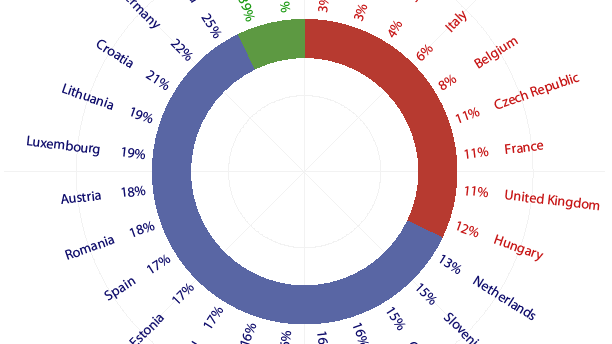
The chart above, based on data from the third EQLS, shows the percentage of people who strongly agreed with the statement ‘I am optimistic about the future’ in 2012.
The annual meeting of Eurofound’s correspondents – in the fourth and final year of the current contract – will take place in Dublin on 27–28 March. Guest speaker Raymond Maes, Deputy Head of Unit at the European Commission’s DG Employment, will outline the EU priorities for the coming period.
Eurofound is in the process of drawing up a list of academic experts to cover the research areas of its 2017–2020 programme. Experts may be asked to advise on planned research approaches and methodologies or to carry out peer reviews.

Developments in the field of employment and social affairs announced in the European Commission’s work programme for 2017 include initiatives to address the challenges of work–life balance faced by working families, a European Pillar of Social Rights aimed at fostering a fair playing field in the European social market economy, and a White Paper on the Future of Europe.
Eurofound hosted a delegation from the European Parliament’s Committee on Employment and Social Affairs in Dublin on 20–21 February. The delegation included Jean Lambert MEP (Greens/EFA), Joëlle Mélin MEP (ENF), Laura Agea MEP (EFDD), Javi López MEP (S&D), and Lynn Boylan MEP (GUE/ NGL).
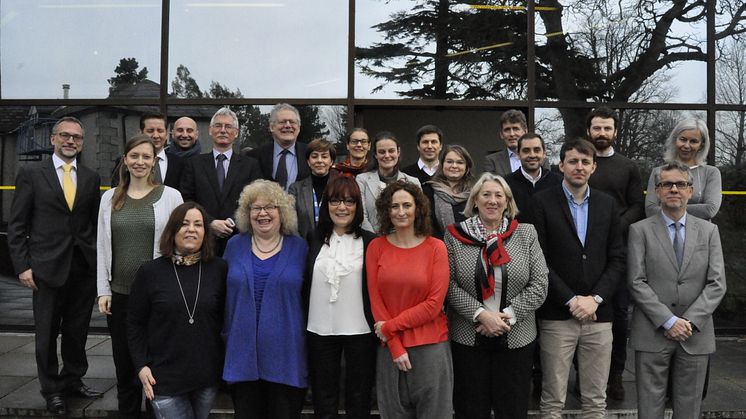
On the occasion of International Women's Day, Eurofound Senior Research Manager Massimiliano Mascherini looks at the impact of the gender employment gap on Europe.