World Mental Health Day
Today is World Mental Health Day, an opportunity to raise awareness of mental health issues around the world and to mobilise efforts in support of mental health.

Today is World Mental Health Day, an opportunity to raise awareness of mental health issues around the world and to mobilise efforts in support of mental health.
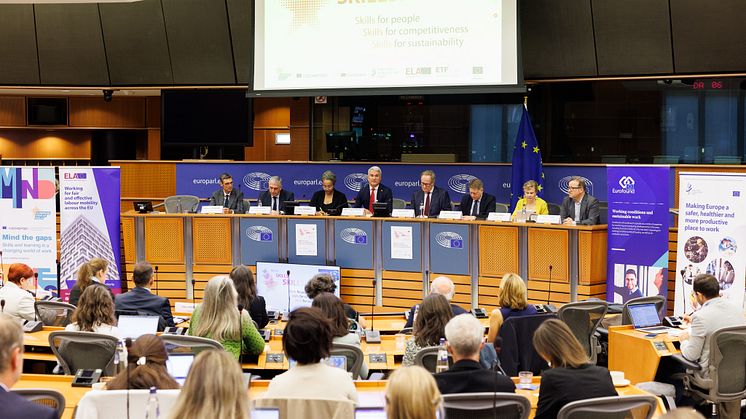
Skills, skills, skills! Skills for people, skills for competitiveness, skills for sustainability, an event on 20 September with the five social EU Agencies in collaboration with the European Parliament and the European Commission will explore skills needs in the EU.
Workers on non-permanent contracts and workers with no formal contract are less satisfied with the functioning of democracy in their country, as are workers experiencing job insecurity.

The EU’s financial commitment to social issues - with government spending on social services such as social protection, education and health claiming a significant 35% of GDP in 2020 - underpinned its resilience to the economic shock of the COVID-19 pandemic.

A new joint report by ECDC and Eurofound concludes that adult work-life balance was significantly affected by measures such as stay-at-home orders and recommendations, closures of day-care, primary and secondary schools and national teleworking recommendations implemented in response to the COVID-19 pandemic.
While some environmental indicators have improved across the EU, there are large inequalities between people at different income levels in Europe, with low-income populations drastically worse off in terms of the quality of their neighbourhood and housing.
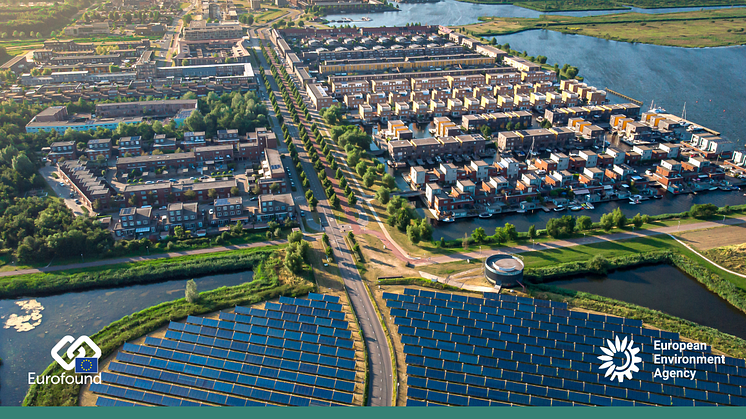
The move to a climate-neutral economy doesn't only represent risks and costs, but it has the potential to create exciting new opportunities with net employment gains, new business sectors and a healthier environment. Eurofound and the EEA have brought together EU level and regional experts and stakeholders to explore what these socioeconomic impacts could be and how policy could respond.

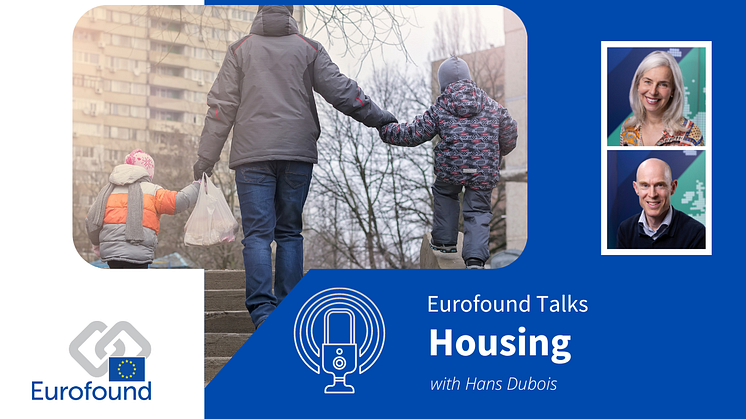
Focusing on prevention, and the strategic application of social support at the right time, is an important aspect of reducing evictions and ensuring citizens have affordable housing options in Europe.
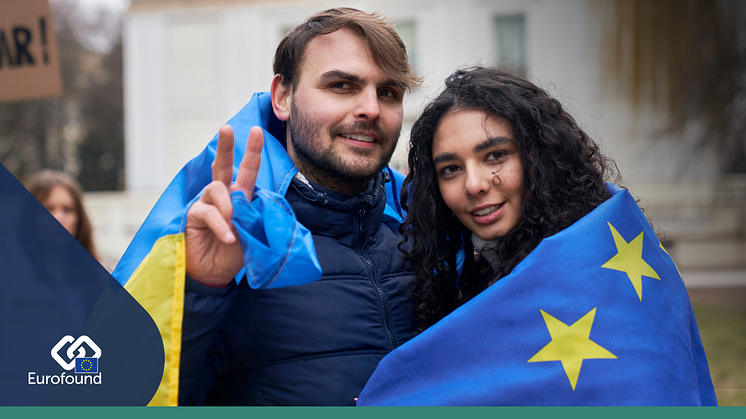
People fleeing Russia’s invasion of Ukraine can seek jobs in Europe but not knowing the host country’s language and temporary job placements are just some of practical barriers identified in a new research paper from Eurofound and the EU Agency for Fundamental Rights (FRA).

Between 2012 and 2020, overall homeownership decreased across the EU, with decreases of more than 3 percentage points in Denmark, Cyprus, Spain, Lithuania, Finland and Bulgaria. This decrease was driven by declining ownership among young people and low-income groups.

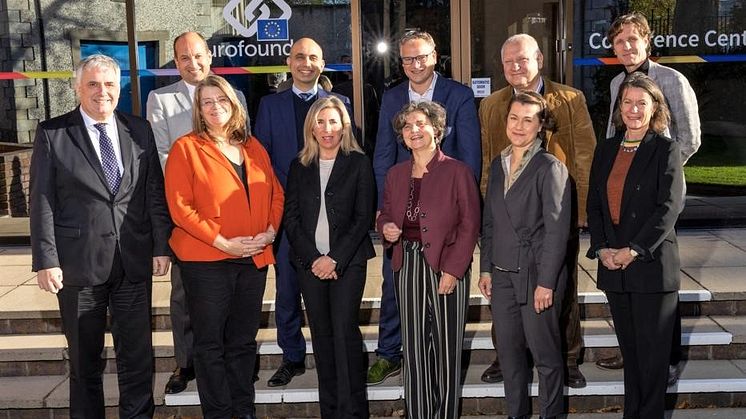
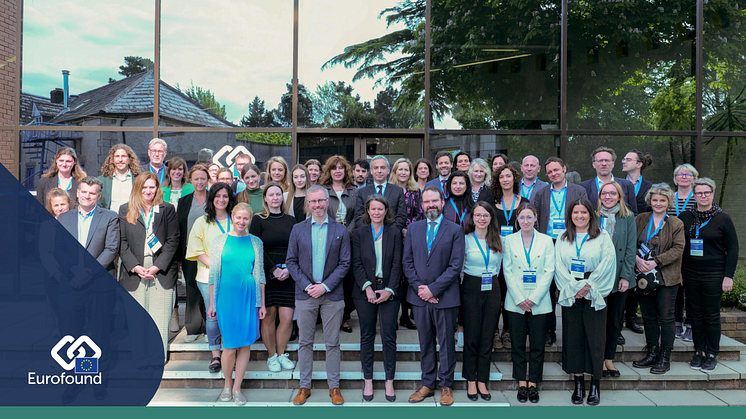
National Child Guarantee Coordinators met at Eurofound in Dublin yesterday, the first in-person meeting to be held in a Member State. Together, National Child Guarantee Coordinators reviewed progress made in reducing child poverty and improving access to services across Europe, as well as sharing practical experiences of sectoral reform.
Europe Day is a celebration of unity, solidarity and harmony. While we may not have had much to celebrate this past year, one thing we can be proud of is how Europe has come together in the face of large-scale challenges and threats, showing that solidarity is the key to resilience and resolve.
Eurofound's Living and working in Europe Yearbook 2022 looks at the major trends in employment, social dialogue, working conditions, living conditions and quality of life in an important year for Europe, which saw the beginning of Russia's brutal war of aggression against Ukraine, and the fallout for Europe and its citizens, including a cost-of-living crisis felt throughout the continent.

While an initiative such as the European Year of Skills is welcome, and improving skills can certainly go some way to help to address labour shortages, it is not a silver bullet. To address these challenges effectively, what is needed is a clear grasp of the drivers behind shortages in specific sectors and occupations and the policy context.

Women in the EU are 3.6 times more likely to suffer from unwanted sexual attention than men, with the likelihood of a young woman (18–34 years) reporting unwanted sexual attention three times higher than men of the same age, and 10 times higher than the oldest group of men (50+ years). This problem is even more acute for frontline workers, according to the most recent data.

Ireland’s economic and social transformation since it joined the European Economic Community 50 years ago is a positive reflection on the Irish people, as well as the EU, and European cooperation.
With inflation expected to persist, a further depreciation of minimum wages in real terms can be expected in most Member States, as only a few foresee additional increases in 2023.

The rising cost of living is the most pressing worry for 93% of Europeans, followed by the threat of poverty and social exclusion, according to a recent European Parliament Eurobarometer survey.

The new factsheet on Living, working and COVID-19 in the European Union and 10 EU neighbouring countries presents a selection of results from the fifth round of Eurofound’s e-survey which extended to 10 neighbouring countries for the first time.

Stefania Rossi has been elected Chair of Eurofound’s Management Board at the Agency’s annual Management Board meeting in Dublin on 18 November. The annual gathering of representatives from governments, employer organisations and trade unions in all EU 27 Member States, and the European Commission and the European Parliament, also approved Eurofound’s work programme for 2023.