One in five jobs in the EU classified as vulnerable
Close to one in five jobs in the EU (19%) could be classified as vulnerable – a multidimensional phenomenon encompassing income inadequacy, employment insecurity and lack of workplace rights.
Technology is more likely to create new tasks than remove existing ones, according to new findings from the unique pan-European Working Conditions Survey. Rather than widespread destruction, the primary challenges facing the EU workforce as digitalisation transforms the European labour market, are shifting towards skills mismatches, generational divides, and worker autonomy.
Workers in Member States that joined the European Union after 2004 have, on average, longer normal annual working time. Workers in these countries also generally have a lower amount of statutory minimum days of leave.
Eurofound projects that the EU’s commitments to achieve a 55% reduction in greenhouse gas emissions compared with 1990 levels by 2030 (‘Fit for 55’) will be marginally positive for employment in the EU, with a net creation of 204,000 jobs.
The working conditions of Europe’s essential workers is the focus of the new episode of the Eurofound Talks podcast.
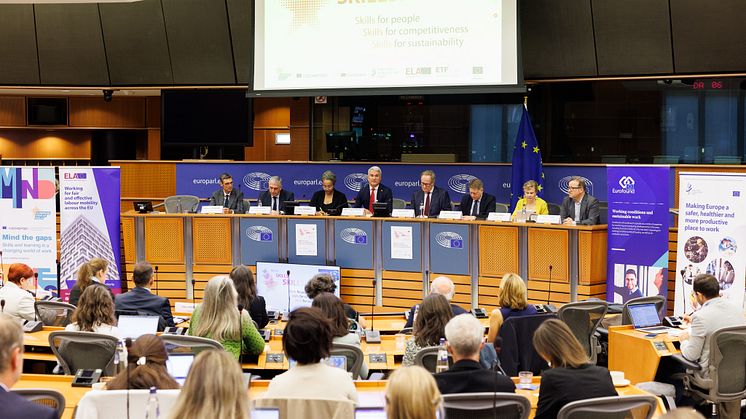
Skills, skills, skills! Skills for people, skills for competitiveness, skills for sustainability, an event on 20 September with the five social EU Agencies in collaboration with the European Parliament and the European Commission will explore skills needs in the EU.
While losses in real minimum wages have occurred in several countries across the European Union, these have not eroded the long-term gains of purchasing power that have occurred across the EU since 2013. In an effort to offset inflation, governments have significantly increased nominal minimum wages across Europe. In 2023, the median nominal increase was almost 11%, compared with just 5% in 2
The move to a climate-neutral economy doesn't only represent risks and costs, but it has the potential to create exciting new opportunities with net employment gains, new business sectors and a healthier environment. Eurofound and the EEA have brought together EU level and regional experts and stakeholders to explore what these socioeconomic impacts could be and how policy could respond.
Focusing on prevention, and the strategic application of social support at the right time, is an important aspect of reducing evictions and ensuring citizens have affordable housing options in Europe.
People fleeing Russia’s invasion of Ukraine can seek jobs in Europe but not knowing the host country’s language and temporary job placements are just some of practical barriers identified in a new research paper from Eurofound and the EU Agency for Fundamental Rights (FRA).
Between 2012 and 2020, overall homeownership decreased across the EU, with decreases of more than 3 percentage points in Denmark, Cyprus, Spain, Lithuania, Finland and Bulgaria. This decrease was driven by declining ownership among young people and low-income groups.
Europe Day is a celebration of unity, solidarity and harmony. While we may not have had much to celebrate this past year, one thing we can be proud of is how Europe has come together in the face of large-scale challenges and threats, showing that solidarity is the key to resilience and resolve.
Eurofound's Living and working in Europe Yearbook 2022 looks at the major trends in employment, social dialogue, working conditions, living conditions and quality of life in an important year for Europe, which saw the beginning of Russia's brutal war of aggression against Ukraine, and the fallout for Europe and its citizens, including a cost-of-living crisis felt throughout the continent.
While an initiative such as the European Year of Skills is welcome, and improving skills can certainly go some way to help to address labour shortages, it is not a silver bullet. To address these challenges effectively, what is needed is a clear grasp of the drivers behind shortages in specific sectors and occupations and the policy context.
Eurofound’s new report looks at measures implemented at national level to tackle labour shortages in the health, care, and information and communication technology sectors, as well as those arising from the twin green and digital transition, to assesses what works and the contextual factors supporting or hindering effective policy implementation and outcomes.
The new episode of Eurofound Talks looks at the issue of job quality in the modern workplace. Mary McCaughey speaks with Eurofound Head of Unit for Working Life Barbara Gerstenberger about what the EWCTS reveals about job quality, the implications of poor-quality jobs on well-being and broader society, and what policymakers can do to improve the working lives of people in Europe.
Ireland’s economic and social transformation since it joined the European Economic Community 50 years ago is a positive reflection on the Irish people, as well as the EU, and European cooperation.
With inflation expected to persist, a further depreciation of minimum wages in real terms can be expected in most Member States, as only a few foresee additional increases in 2023.
The rising cost of living is the most pressing worry for 93% of Europeans, followed by the threat of poverty and social exclusion, according to a recent European Parliament Eurobarometer survey.
41.7 million people teleworked across the EU in 2021, double the number of 2019, as COVID-19 restrictions and changes in work culture significantly impacted work organisation.