Jan Kouwenberg elected Chair of Eurofound’s Management Board
Jan Kouwenberg has been elected Chair of Eurofound’s Management Board at the Agency’s annual Management Board meeting in Dublin today.
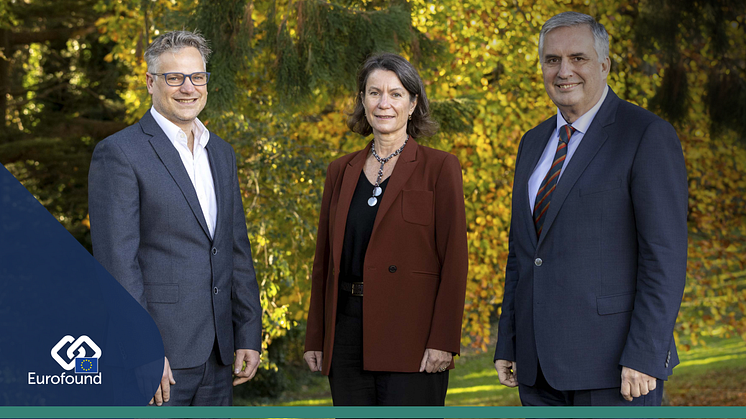
Jan Kouwenberg has been elected Chair of Eurofound’s Management Board at the Agency’s annual Management Board meeting in Dublin today.
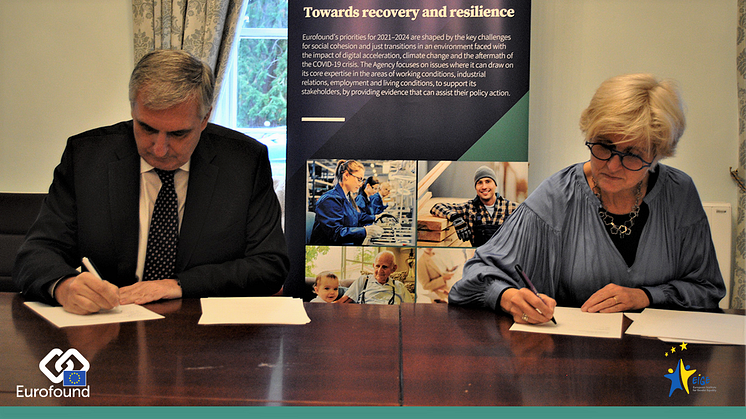
Ivailo Kalfin, Eurofound Executive Director, and Carlien Scheele, Director of the European Institute for Gender Equality (EIGE) met in Dublin today on the sidelines of Eurofound’s annual Management Board meeting, to discuss latest developments in gender equality in Europe and sign a joint action plan defining future collaboration between the two Agencies.
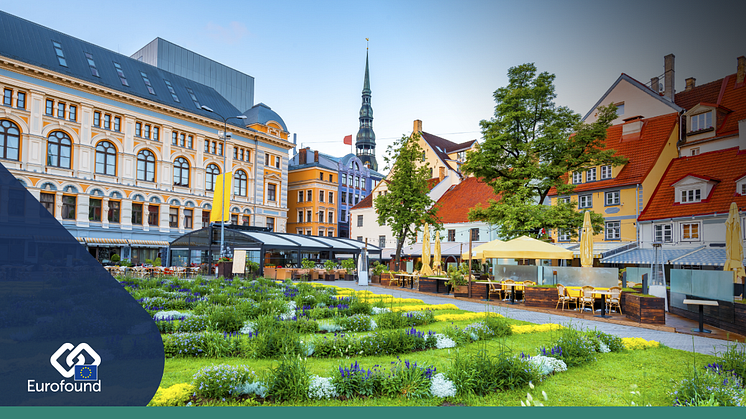
Despite the disproportionate impacts of the COVID-19 pandemic on young people in the EU, Latvia has managed to retain a comparatively high level of optimism among its younger population, with 70% of people aged 18-29 in the country optimistic about their future. This is the second highest optimism score in the EU during spring 2021, only behind Malta, while the EU27’s average is 49% of young peopl
Eurofound’s Executive Director met with H.E. Leonard Sacco, Ambassador of the Republic of Malta to Ireland, in Eurofound yesterday to discuss latest findings and developments, including on the impact of the COVID-19 pandemic on youth.
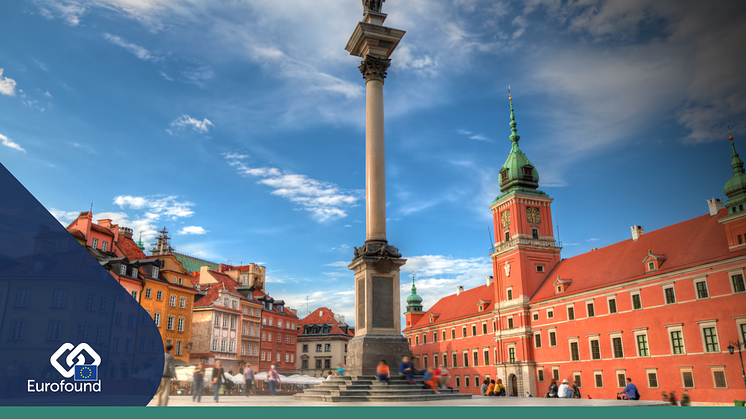
Employees in Poland are working 1,848 hours per year, the highest annual working hours figure (alongside Hungary) across the EU. The shortest hours are found in Germany (1,574 hours), France (1,610 hours) and Denmark (1,635 hours). These figures are part of Eurofound’s Working time in 2019–2020 report, which documents the most relevant changes in working time regulation after the onset of the COVI
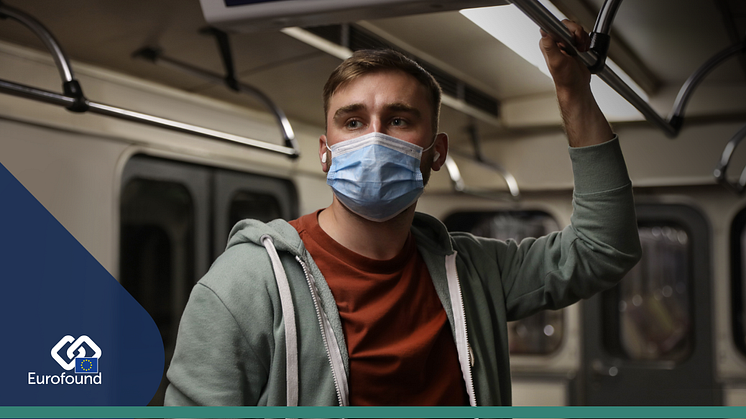
COVID-19 ended a six-year decline in youth unemployment, with young people more likely to find themselves unemployed and to report poor mental health than the rest of the population. Young people were hit particularly hard both economically and socially with the pandemic striking Europe as youth unemployment was returning to pre-economic crisis levels for the first time. Economic and well-being ou
New technologies such as the Internet of Things, 3D printing, and virtual and augmented reality can help put greater emphasis on managerial and analytical tasks, reduce physically demanding tasks, drive the upgrading of skills and increase job discretion. However, some aspects of these technologies, particularly the Internet of Things, raise concerns that employee performance could be excessively

Recycling revenues from energy and carbon taxes to support low-income groups, investing in renovating buildings and in green mobility are among measures that could ensure public support for Europe’s sustainability agenda and a socially just transition.
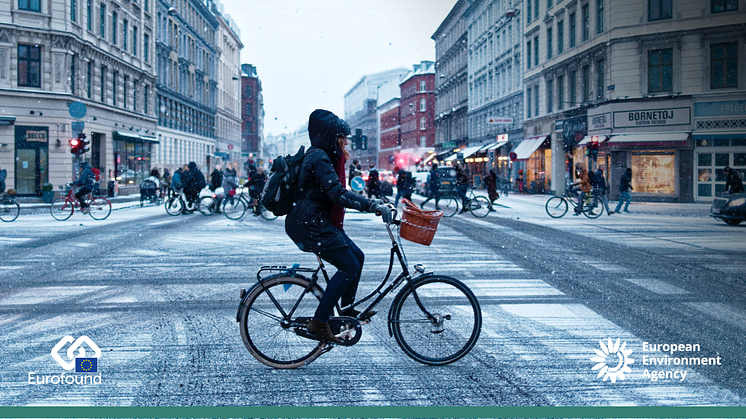
In quarter four of 2020, weekly working hours in Czechia decreased by 2.8 hours, marking the largest decrease in the EU in a year-on-year comparison with the same period of 2019 and followed by Austria (-1.8 hours per week). The EU’s average for the end-of-year quarter lies at -0.5 hours. This data was recently published in a joint Eurofound and European Commission report (What just happened? COVI
Die wöchentliche Arbeitszeit in Österreich hat sich zu Beginn der COVID-19 Pandemie (2. Quartal 2020) im Vergleich zum Vorjahreszeitraum um 2,6 Stunden verringert. Dies war der größte Rückgang in der EU und liegt über dem EU-Durchschnitt von -0,9 Stunden, wie aus einem gemeinsamen Bericht von Eurofound und der Europäischen Kommission hervorgeht (Was ist gerade passiert? COVID-19-Sperren und Veränd
Weekly working hours in Austria decreased by 2.6 hours at the onset of the COVID-19 pandemic (quarter 2 2020) as compared to the same time of the previous year. This was the largest decrease in the EU and far beyond the EU average of -0.9 hours, as reported by a joint Eurofound and European Commission report (What just happened? COVID-19 lockdowns and change in the labour market), which describes
Temporary workers, particularly those in non-teleworkable occupations such as services and sales jobs, elementary occupations and blue-collar occupations, were disproportionately impacted by COVID-19 job loss in Europe, accounting for three-quarters of net job loss in the EU in 2020.

While 57% of respondents in Spain are pessimistic about the future of their country, only 7% expect their personal life to get worse in the next 12 months. This pessimism gap, which relates to the contrast between societal and personal perceptions of the future, of 50 percentage points in Spain is among the largest of the EU27. The European average equals 34 percentage points, however, the variati
Mental well-being indicators for young people and women have decreased disproportionately across the EU between summer 2020 and spring 2021, against a background of overall decline in mental health well-being across the EU. The long term effects of this for society and the economy are of serious concern. This is according to Eurofound’s large-scale Living, working and COVID-19 online survey.
T
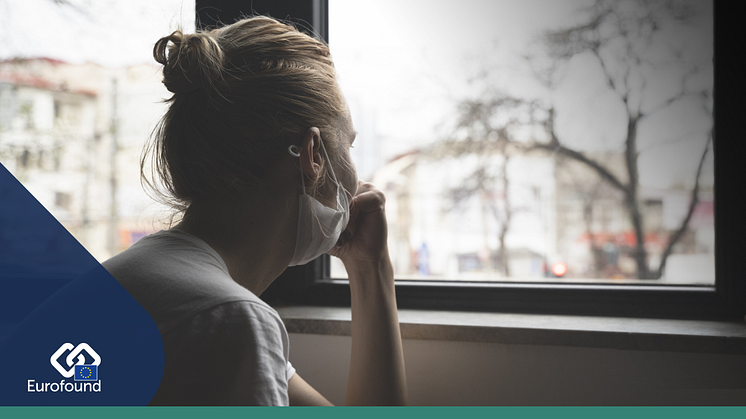
The outbreak of COVID-19 in Europe may be moving gradually into history, but the long-term impacts of the pandemic on our work and lives is just beginning.

The COVID-19 pandemic has exposed structural inequalities in healthcare capacity across EU Member States threatening convergence in healthcare - where central and eastern Member States with lower health indicators had been catching up with more affluent Member States in a number of areas. This could have serious consequences for economies, labour markets and cohesion across the Union.

Ireland and Denmark are the most socially optimistic countries in the EU, according to Eurofound's Social Optimism Index, a newly developed composite indicator which measures six variables of optimism among people in Europe.
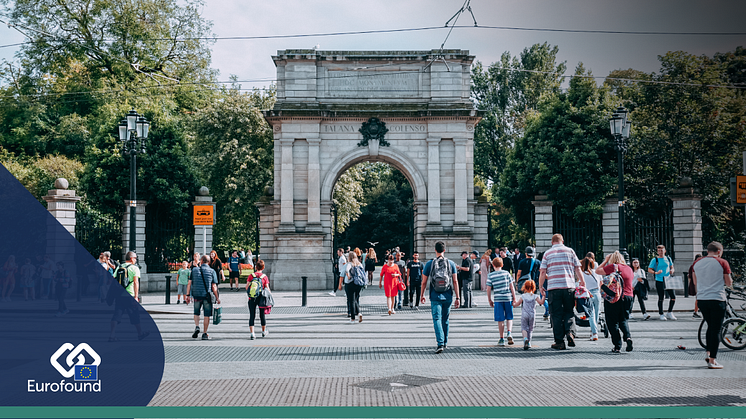
Trust in Germany’s national government decreased from 5.7 to 4.3 between summer 2020 and spring 2021, according to Eurofound’s large-scale Living, working and COVID-19 online survey. This is the third largest decline compared to other EU countries, behind Austria and Cyprus.
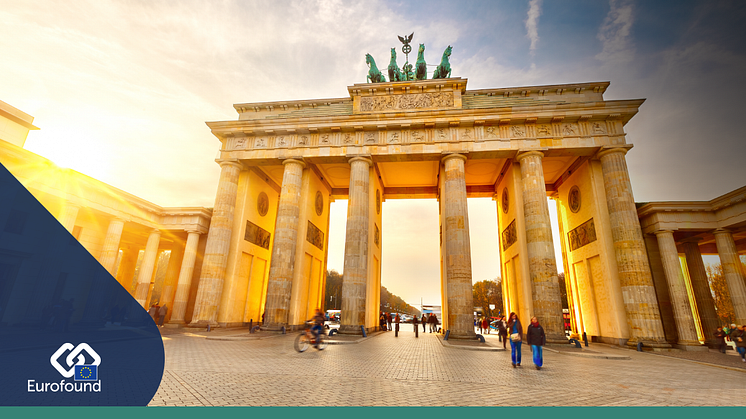
Das Vertrauen in die nationale Regierung Deutschlands ist zwischen Sommer 2020 und Frühjahr 2021 von 5,7 auf 4,3 gesunken. Das ist der drittgrößte Rückgang im EU-Vergleich, nach Österreich und Zypern.
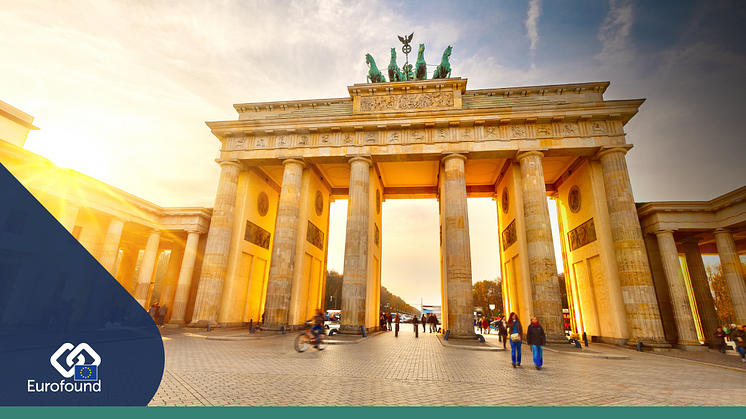
Eurofound, in cooperation with the Embassy of the Republic of Slovenia in Ireland (in the framework of the Presidency of the Council of the European Union), will host a meeting of the EU Heads of Missions in Ireland on Tuesday 28 September.